Hello education heroes and clinical pioneers! Uni-Ted here, wrapped up in my favorite blue scarf and ready to talk about the incredible diversity within healthcare support roles today. While nurses and doctors are the faces of care, a massive team of specialized professionals keeps the heart of the hospital beating. In 2026, the demand for these technical and clinical support experts is growing faster than ever. Whether you are looking for allied health jobs US or exploring behind-the-scenes technical careers, this guide will help you find the right path for your skills. Let’s explore how you can build a meaningful career in these essential roles!
Explore Allied Health Opportunities
Ready to build your career in clinical and technical support? Browse these high-demand allied health roles:
Why Allied Health Career Paths Are Growing in 2026
The healthcare landscape has evolved, and hospitals now rely on a multidisciplinary team to ensure patient safety and functional recovery. Specialized healthcare support roles are no longer just extra positions; they are the backbone of diagnostic and surgical excellence.
What is Driving Demand for Allied Health Professionals:
- Aging populations requiring more complex surgical and rehabilitative care.
- Technological advancements in surgical suites and diagnostic imaging labs.
- Increased focus on recovery and quality of life through specialized therapy.
- Shortages in specialized clinical roles creating premium contract opportunities.
- Expansion of outpatient centers where support roles are critical for workflow.
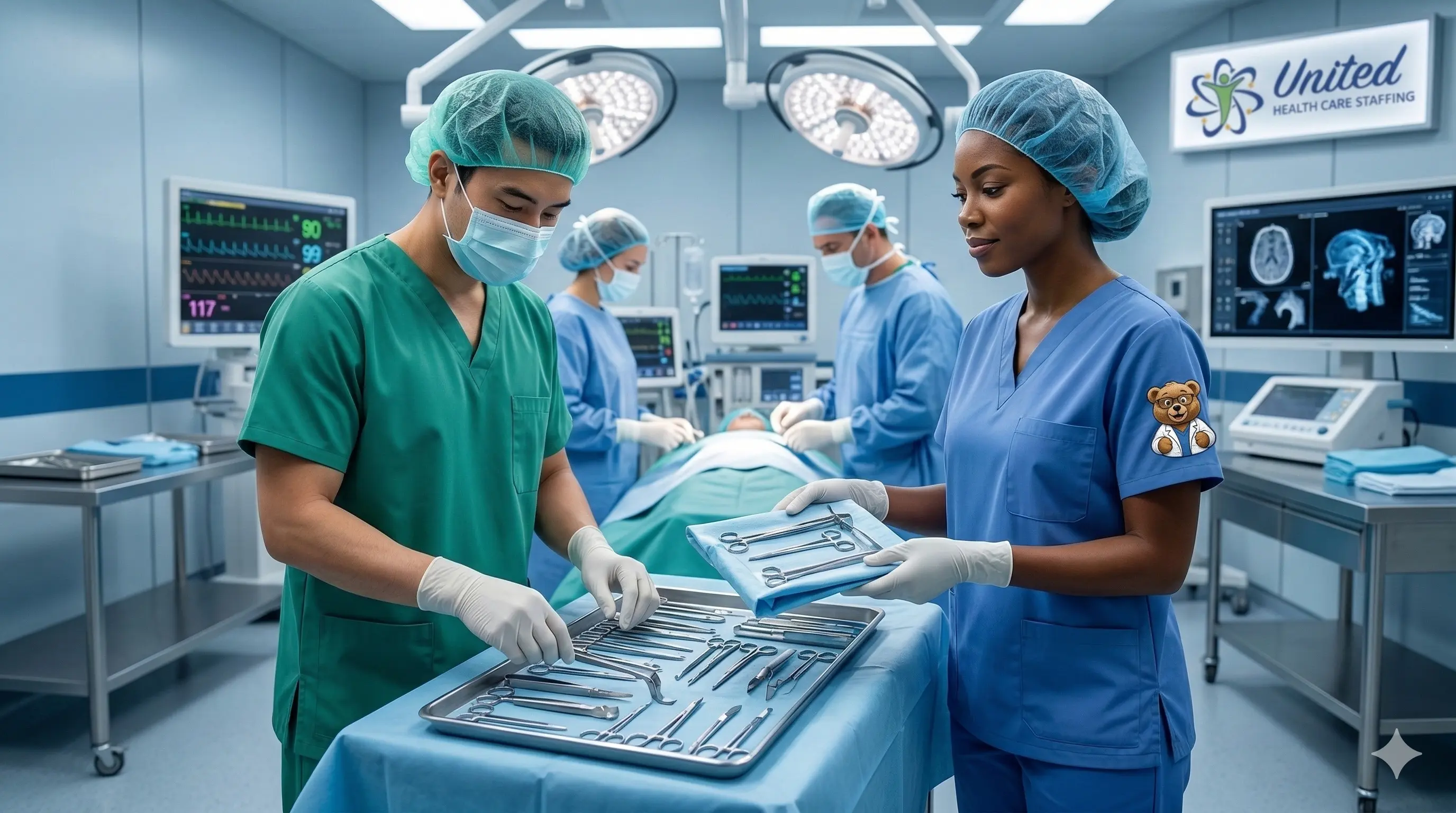
High-Demand Allied Health Career Paths
Let's look at the specific paths currently dominating the allied health jobs US market and why they are essential to modern medicine.
Sterile Processing Tech Jobs – The Guardians of Safety
Often called the heart of the hospital, sterile processing technicians ensure that every surgical instrument is decontaminated and ready for use. These roles are critical for infection control and are among the most stable allied health careers in demand today. Without these pros, surgeries simply cannot happen.
Surgical Assistant Roles – Precision in the OR
Working directly under surgeons, surgical assistants provide aid in exposure, hemostasis, and other technical functions. These surgical assistant roles require high levels of coordination and offer a fast-paced, high-stakes environment for those who love the operating room.
Imaging and Diagnostic Support
From radiologic technologists to MRI specialists, diagnostic roles are surging. As healthcare becomes more data-driven, the professionals who operate this advanced machinery are becoming more essential to accurate diagnosis and treatment planning.
Choosing the Right Partner
Your recruiter should provide a clear explanation of every contract detail and offer transparent communication about your compensation and benefits. Whether you are looking for travel contracts or permanent placement, having an advocate helps you secure the best allied health career paths.
Got Questions?
Frequently Asked Questions About Healthcare Support Roles
These include diverse positions like sterile processing technicians, surgical assistants, and therapists who support direct patient care and clinical operations.
Yes, demand has surged due to aging populations and a greater emphasis on interdisciplinary team-based care.
Most roles require a specialized certification and an understanding of microbiology and sterilization techniques to ensure patient safety.
These roles typically require formal surgical technology training followed by specialized assistant certification and clinical experience in the OR.
Specialized roles like surgical assistants, MRI technologists, and specialized therapists often command higher pay packages based on technical expertise.
Absolutely! Many facilities across the US offer travel contracts for surgical techs, imaging professionals, and therapists with premium stipends.