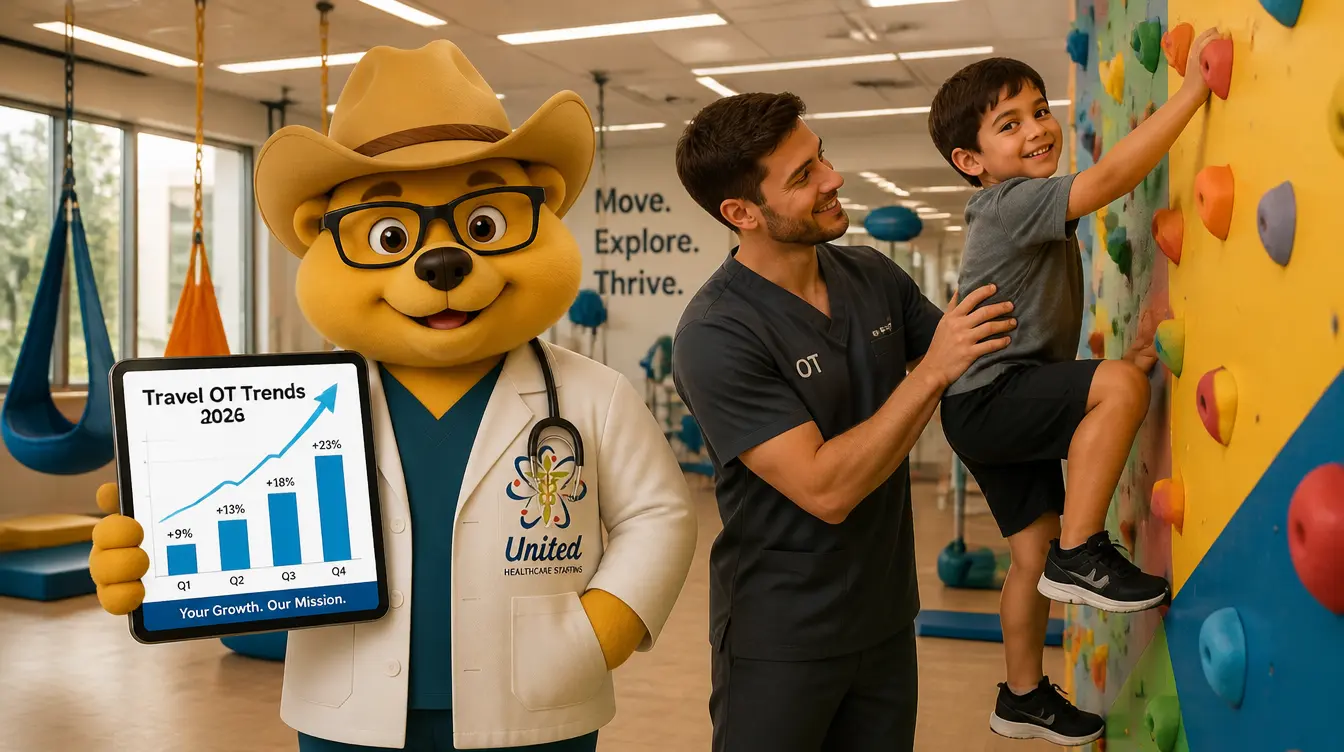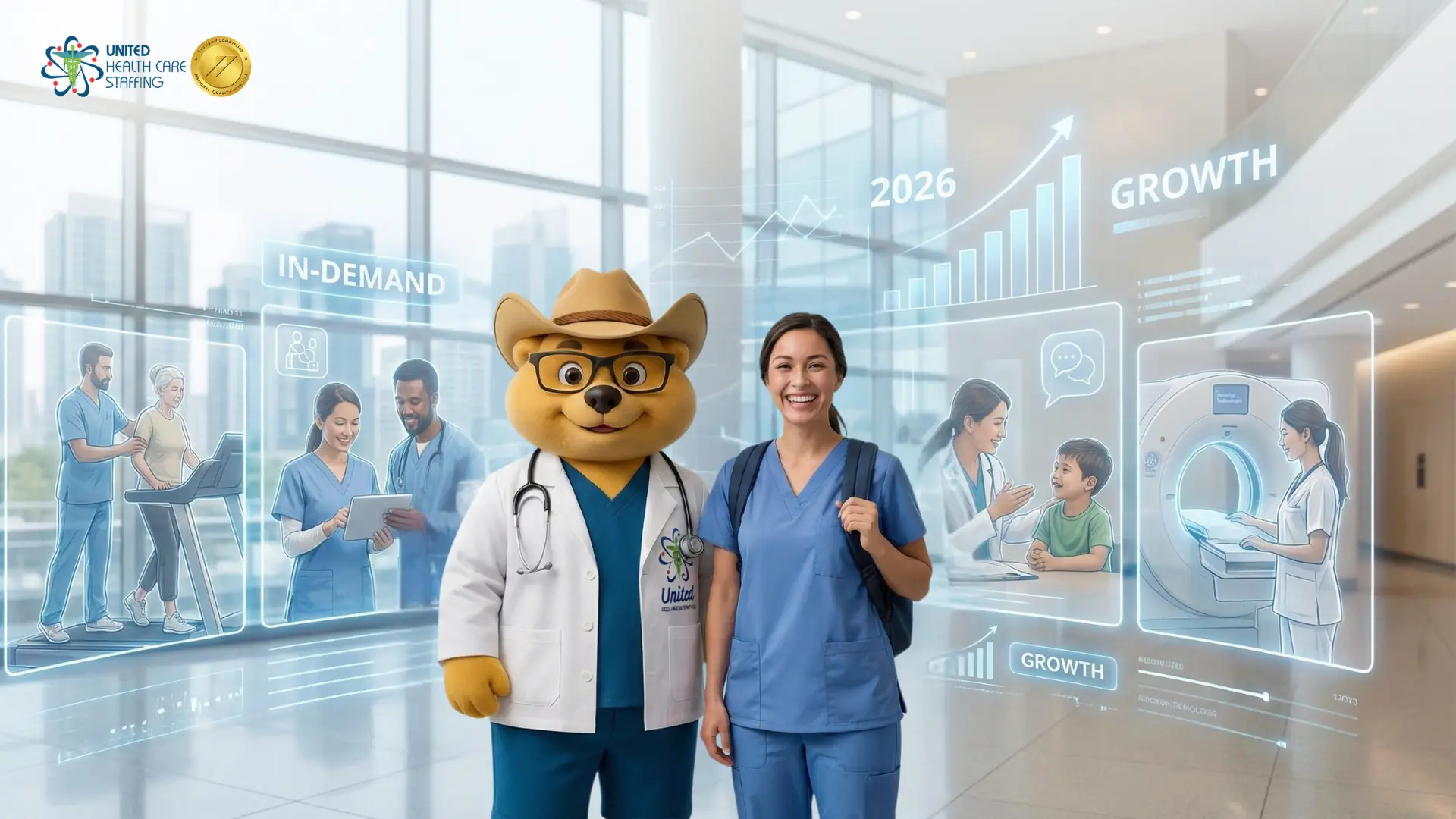
A message from Uni-Ted, Chief Snuggle Officer at UHC Staffing: Hello there, healthcare changemakers! Uni-Ted here, your fuzzy guide to meaningful careers and smart moves. If you’ve been wondering which allied health careers are in high demand in 2026, you’re asking the right question at exactly the right time. Allied health professionals are the backbone of patient care. From therapy and diagnostics to rehabilitation and care coordination, these roles are essential across hospitals, schools, clinics, and community settings. In 2026, demand is strong and growing for skilled allied health professionals nationwide. Let’s explore the most in-demand allied health careers and why they’re shaping the future of healthcare.
Why Allied Health Careers Are in High Demand in 2026
Several factors are driving demand:
- Aging populations requiring rehabilitation and therapy services
- Increased focus on recovery, function, and quality of life
- Expansion of outpatient, home health, and school-based care
- Shortages in specialized clinical roles
- Greater emphasis on interdisciplinary healthcare teams
As healthcare evolves, allied health professionals are more critical than ever. Allied health professionals are needed most in hospitals, skilled nursing and rehab centers, outpatient clinics, and home health settings.

Top In-Demand Allied Health Careers in 2026
1. Speech-Language Pathologists (SLPs)
SLPs are in high demand across medical and educational settings, working in hospitals, schools, rehab centers, and outpatient clinics. The growing demand is due to increased awareness of speech and cognitive disorders, rising pediatric and neurological caseloads, and the strong need for communication-focused care across the lifespan.
2. Occupational Therapists (OTs) and COTAs
Occupational therapy is essential for patients with neurological and orthopedic recovery needs, pediatric development, and sensory integration. OTs are crucial in expanding school-based therapy programs, outpatient therapy, and assisting aging populations in gaining independence.
3. Physical Therapists (PTs) and PTAs
PTs and PTAs continue to be essential in rehabilitation, focusing on mobility, fall prevention, recovery, and wellness initiatives. They work in hospitals, outpatient clinics, sports centers, and skilled nursing facilities.
4. Medical Laboratory Professionals
Lab professionals are needed to conduct diagnostic testing and collaborate with clinical teams for accurate diagnoses. As the medical technology industry advances, the demand for laboratory professionals continues to rise.
5. Radiologic and Imaging Technologists
Imaging roles such as radiologic technologists, MRI/CT technologists, and diagnostic imaging specialists are growing due to the increased reliance on diagnostic imaging, outpatient imaging centers, and advancements in imaging technology.
Got Questions?
Yes, demand remains strong due to healthcare growth and workforce shortages.
Yes, many work in schools, clinics, home health, and community settings.
Yes, there are travel and contract opportunities across various allied health roles.
Yes, they offer advancement through specialization, leadership, or education.