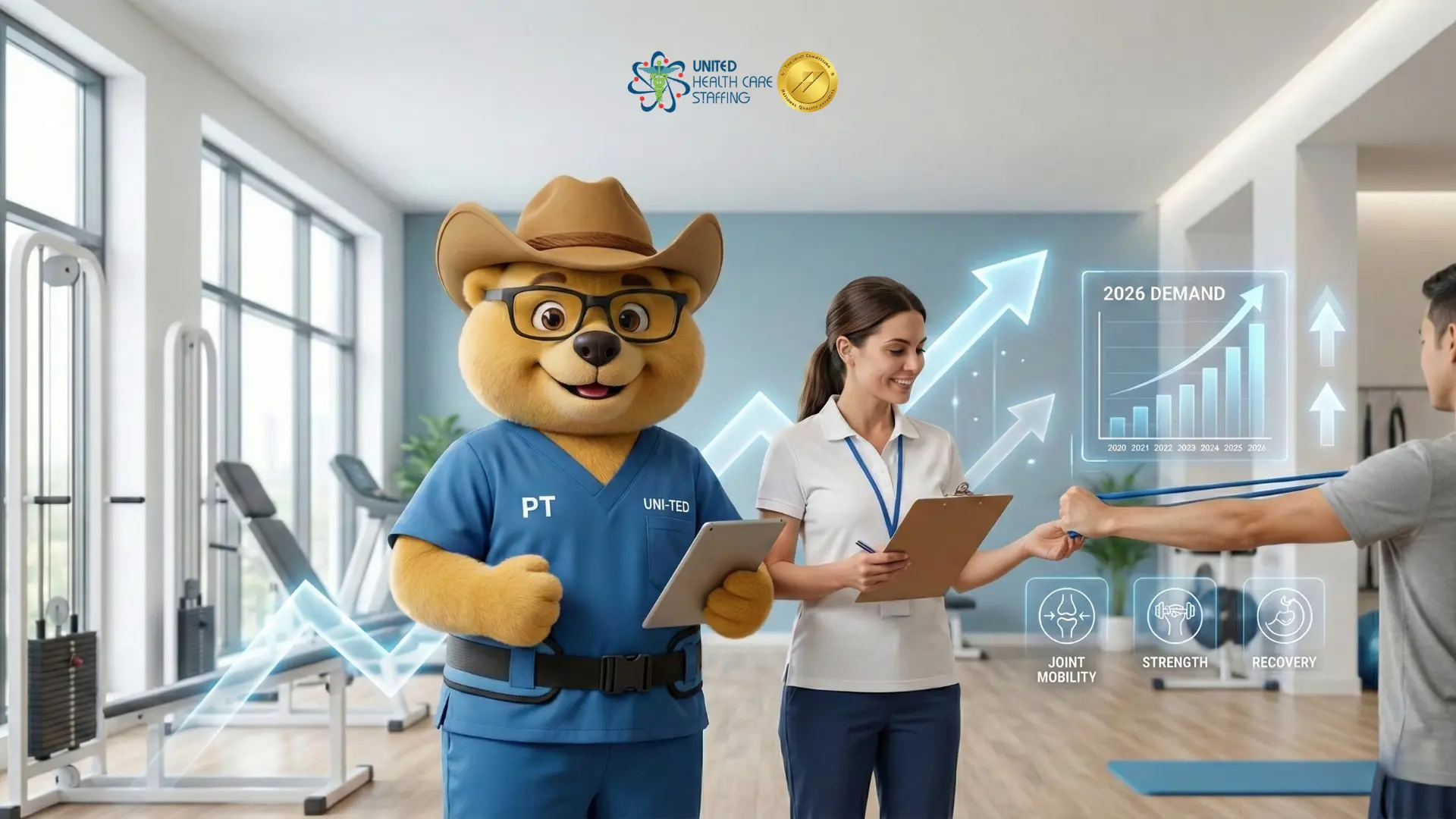
A message from Uni-Ted, Chief Snuggle Officer at UHC Staffing: Hello movement makers and recovery champions! Uni-Ted here, your fuzzy guide to future-proof healthcare careers. If you’re asking why physical therapists are in demand in 2026, you’re already ahead of the curve. Physical therapists (PTs) play a critical role in helping patients regain mobility, independence, and quality of life. As healthcare shifts toward prevention, rehabilitation, and functional outcomes, the demand for PTs continues to rise across the United States. Let’s break down exactly why PTs are so essential in 2026 and where the opportunities are growing fastest.
Why Physical Therapists Are in High Demand in 2026
Several factors are driving demand for physical therapists in 2026:
- Aging populations requiring rehabilitation services
- Increased focus on recovery, functional outcomes, and quality of life
- Expansion of outpatient, home health, and community-based care
- Rising patient volumes due to surgical procedures and injuries
- Greater emphasis on preventative healthcare and wellness initiatives
As healthcare evolves, PTs are becoming more critical than ever in delivering patient-centered care.
Why Physical Therapists Are in Demand and the Opportunities in 2026
Physical therapists (PTs) are in high demand for several reasons. From an aging population to the growing emphasis on functional outcomes and preventative care, PTs are critical to healthcare’s evolution. With rising needs in rehabilitation, injury recovery, and chronic care, physical therapists have opportunities to work across a variety of settings, making it one of the most dynamic and rewarding careers in healthcare today.
1. An Aging Population Driving Rehab Needs
As the population ages, the demand for rehabilitation services increases. Older adults require fall prevention programs, post-surgical rehabilitation, joint replacement recovery, chronic condition management, and mobility training. PTs help older adults remain active, independent, and safe, ensuring that the aging population maintains their quality of life.
2. Increased Focus on Functional Outcomes
Healthcare is moving towards long-term functional outcomes instead of just treating and discharging patients. PTs are at the forefront of this shift, focusing on restoring strength, mobility, and preventing injuries. This focus on functionality in patient care makes physical therapy a cornerstone of modern healthcare, and PTs are essential in helping patients regain independence and improve their quality of life.
3. Growth in Outpatient and Community-Based Care
In 2026, more care is delivered outside of hospitals, and PTs are needed in outpatient orthopedic clinics, home health settings, and community-based rehab programs. This decentralized model of healthcare is more accessible and allows PTs to provide hands-on recovery in familiar and everyday environments, further increasing the demand for their services.
4. Rising Demand After Surgery and Injury
With advancements in surgical procedures, recovery expectations have increased. PTs are crucial to post-orthopedic surgeries, sports injuries, neurological events, and workplace injuries. Physical therapy is vital for rehabilitation timelines, ensuring that patients recover safely and effectively.
5. Increased Awareness of Preventative Care
Preventative care continues to gain popularity in 2026, and PTs are taking a leading role. By identifying movement dysfunctions early, preventing injuries, and improving posture and biomechanics, physical therapists reduce long-term disability risks. As more people recognize the importance of preventative care, PTs are seeing increasing demand.
6. Expanded Roles in Neurological and Chronic Care
PTs are increasingly needed to manage long-term and neurological conditions. Areas of focus include stroke recovery, Parkinson’s disease, multiple sclerosis, chronic pain management, and balance therapy. As the number of individuals with chronic conditions grows, PTs are integral to ongoing patient care and support.
7. Demand Across Diverse Healthcare Settings
Physical therapists are needed in a wide range of healthcare settings, providing opportunities in various environments. They work in acute care hospitals, assisting patients recovering from surgeries or injuries. Many PTs are employed in inpatient rehabilitation facilities, helping patients regain strength and mobility after significant medical events. Skilled nursing facilities also rely on PTs to support elderly patients with mobility issues, while outpatient clinics offer PTs the chance to treat patients in a more flexible setting. PTs are also in demand within home health agencies, where they provide in-home rehabilitation to patients recovering in familiar surroundings. Additionally, sports and orthopedic centers require PTs to help athletes recover from injuries and improve their performance. Finally, schools and pediatric programs offer PTs the opportunity to support children with developmental or physical challenges, making this career path highly versatile and adaptable to different patient needs.
8. Strong Team-Based Healthcare Integration
Physical therapists are crucial members of interdisciplinary healthcare teams. They work closely with physicians, nurses, occupational therapists, speech-language pathologists, and case managers to ensure coordinated care. This team-based approach is essential for providing patient-centered treatment, increasing the importance of physical therapy services in modern healthcare.
9. Career Flexibility and Professional Growth
Physical therapy offers a range of career paths. Many PTs pursue travel or contract roles, obtain specialty certifications, or step into leadership and clinical education positions. The flexibility in career options allows PTs to find a work-life balance that suits their personal and professional goals, while also ensuring long-term career satisfaction.
10. Workforce Shortages and Retirements
Like many healthcare professions, physical therapy is experiencing workforce shortages. Factors such as retiring professionals, increased patient volumes, and the greater need for rehabilitation services are creating gaps in the workforce. These shortages only increase the demand for skilled physical therapists across the country.
Got Questions?
Due to aging populations, increased rehabilitation needs, preventative care, and expanded outpatient services.
Yes, demand continues to grow across nearly all healthcare settings.
Yes, many PTs work in clinics, home health, rehab centers, schools, and community programs.
Absolutely! Physical therapy offers flexibility across specialties and various healthcare environments, allowing PTs to select settings that align with their interests and lifestyle.